
Why roof decking can change a replacement
The shingles are what you see from the street. The deck beneath them is what supports fastening, and its condition can change the work after tear-off.
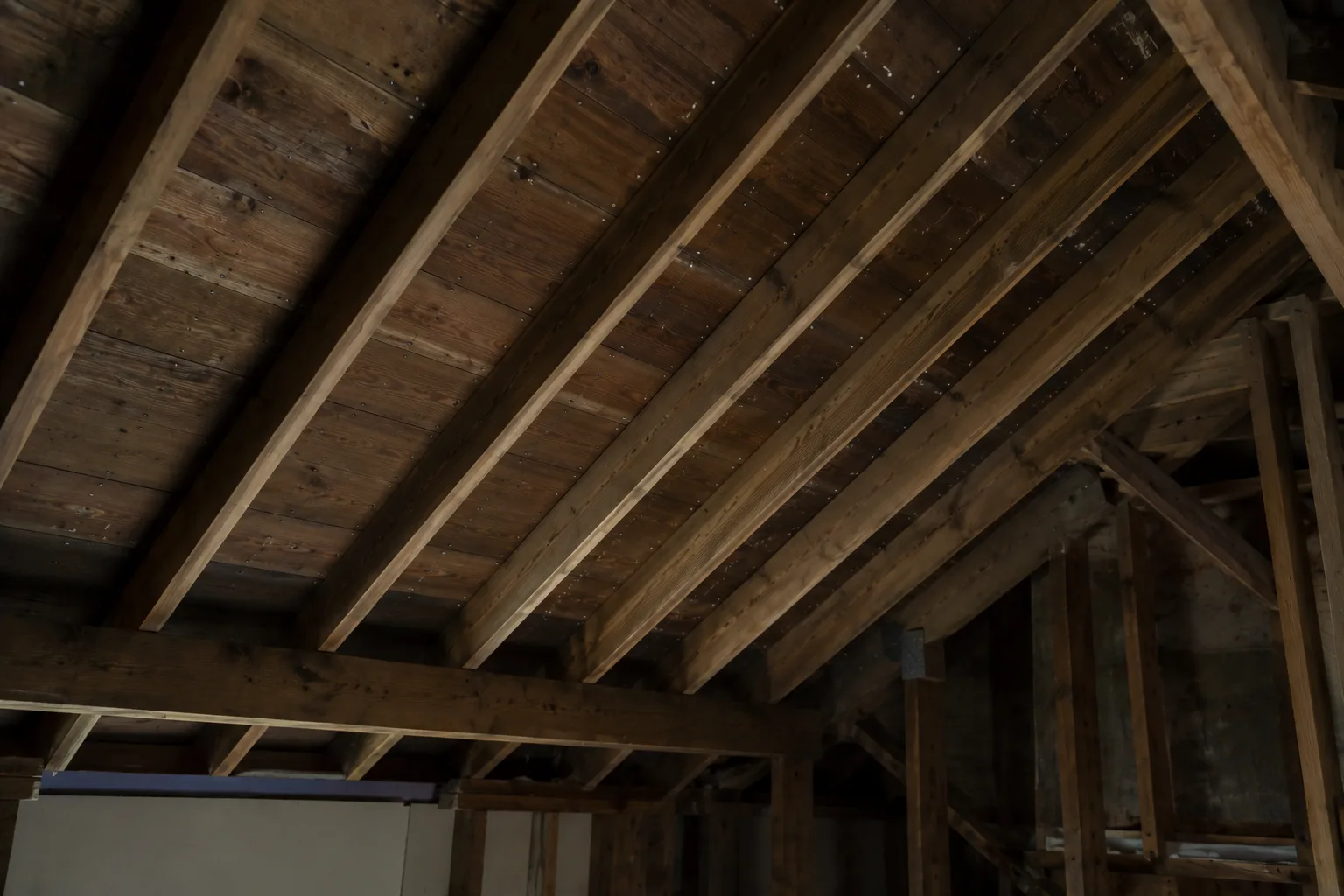
The covering hides part of the scope
Decking is the wood sheathing beneath the roof covering and underlayment. It provides a continuous support surface for the system. A shingle surface can conceal delamination, water deterioration or damaged sections that become visible only when the old covering comes off.
That is why a replacement scope needs to account for deck condition rather than treat new shingles as the whole project. New covering cannot make an unsound fastening surface secure.
What the uncovered deck changes
Damaged sections need appropriate repair or replacement before the new roof is attached. The extent, material and access change the amount of labor. A few defined sections and deterioration continuing across a larger area are different scopes.
The new underlayment, protective membranes and flashing also need a sound base and proper overlap. Concealed details need to remain visible for any applicable mid-roof inspection. Peculiar's roofing form specifically addresses removal to deck, damaged decking and inspection stages; the permit guide develops that local process.
Put the assembly in the budget conversation
A planning range based on measured roof surface can help frame a replacement, but it cannot see damaged wood. Deck repairs, flashing changes, difficult access and system choices need a property-specific scope. The useful price conversation includes those physical variables.
A free inspection is the starting point for understanding the roof before tear-off. If you are considering replacement, contact Peculiar Roofing to discuss the covering, connections and layers beneath it.
Discuss your roof replacement
Start with the roof condition and the work it needs. Request a free inspection in Peculiar.