
Where water goes on a flat roof
A low-slope roof still needs a route for water to leave. Drains, scuppers and roof shape determine whether that route keeps working.
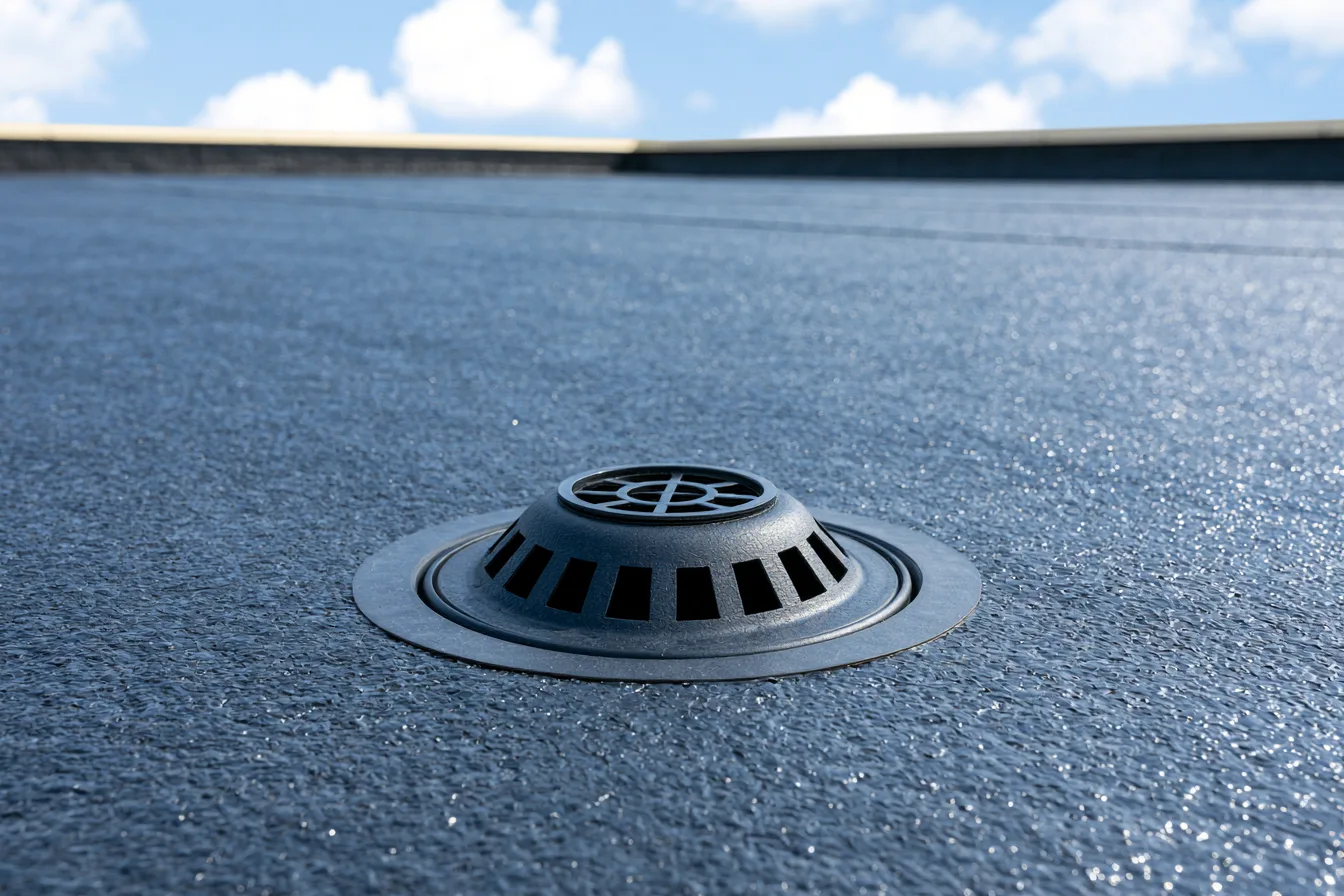
A flat roof is a drainage system
Low-slope roofs direct water toward drains, scuppers or edges. Insulation and the supporting structure can establish the slope. The membrane makes the weather barrier continuous along that path, including its connection to the outlet.
Debris at a drain and a low area in the assembly are different problems. Clearing an outlet can restore a blocked path. It does not change a depression that keeps water away from the outlet.
Why a leak patch can leave water behind
A patch can repair a membrane puncture while leaving the drainage condition unchanged. A new coating also follows the existing surface rather than creating slope. Water remaining in a low area needs the cause evaluated alongside the membrane and the condition beneath it.
Drain flashing, curbs, seams and perimeter details interrupt the field. We examine those connections when tracing water entry. Moisture within insulation or deterioration in the deck can change the work from a surface repair to a broader assembly scope.
Plan roof work around the building
The right next step depends on the system, moisture, attachment and drainage, as well as roof access and the building's occupied use. Repair, restoration and replacement each solve a different range of conditions.
For a leak or a planned low-slope roof project, request a free commercial roof inspection. The commercial roofing pages explain the system choices and the limits that help determine useful work.
Discuss the drainage on your commercial roof
Start with the roof condition and the work it needs. Request a free inspection in Peculiar.